
Why Aren’t Keyboards in ABC Order? The Real Story of QWERTY
Look down at your keyboard: Q, W, E, R, T, Y. Why those letters, in that order? Those letters took their places in the 1870s, on a machine that typed only capital letters and hid each line while you typed it. You may have heard that the order was designed to slow typists down. There is no good evidence for that.[7] The real story involves a printer’s side project, clashing metal arms, telegraph offices, a typing contest and a business deal, and nobody left a note explaining why each key went where.
Prefer to watch? The animated version follows the keyboard from a Milwaukee workshop to the phone in your pocket.
A printer’s side project
Before typewriters, letters and office records were written out by hand, and the typewriter would go on to mechanize much of that work.[5] Inventors had been trying to build writing machines for a long time, and many had been tried, but none had really caught on.[7]
In Milwaukee, a printer and newspaper editor named Christopher Latham Sholes was working on something smaller. With a fellow printer, Samuel Soule, he built a machine for numbering the pages of books, and they patented it in 1866.[7] A lawyer and amateur inventor at the same workshop, Carlos Glidden, asked the obvious question: if it could print numbers, why not letters?[7]
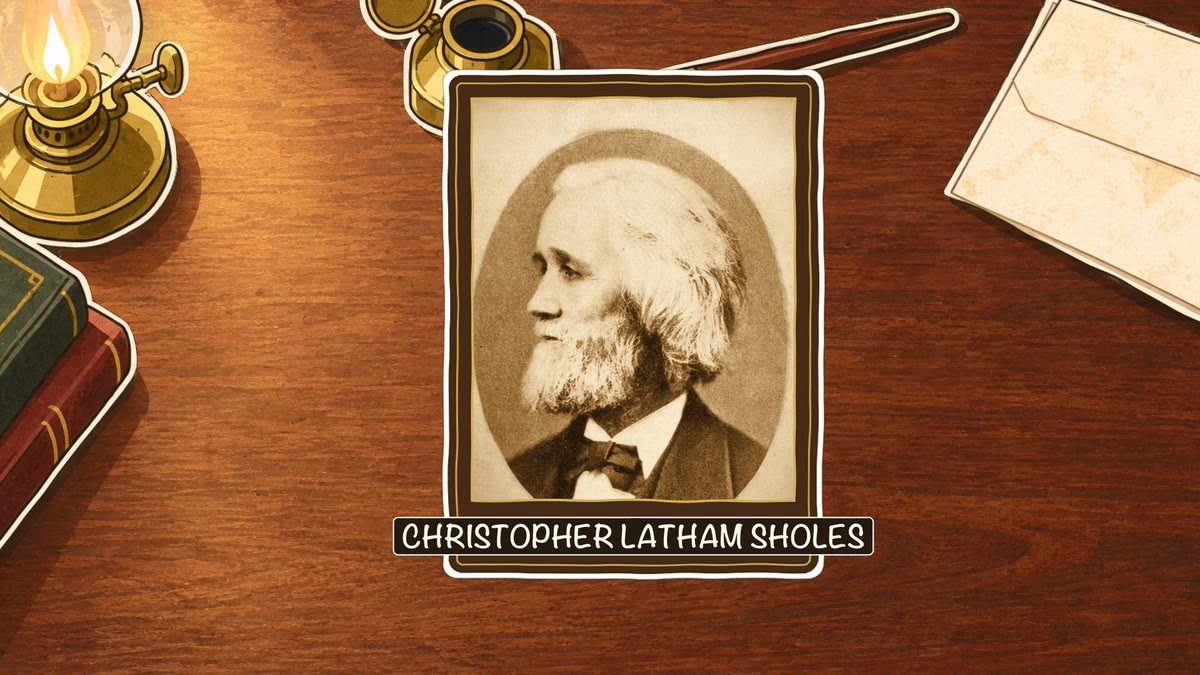
In July 1867, Sholes read a note in Scientific American about another writing machine. He thought it too complicated and decided to build his own. The article called such a machine a “type-writer”, and the name stuck.[7] His earliest keyboards had two rows of keys in roughly alphabetical order, looking a lot like a piano.[7]
Built to be broken
An investor, James Densmore, bought a quarter share in the project in 1867 for $600 and became its main backer.[7] He was blunt: he judged one early model good for nothing except to show that the idea behind it was sound.[7]
Densmore sent machines to people who really needed speed, such as James Clephane, a stenographer in Washington. Clephane tested them so hard that he destroyed them, one after another, and Sholes rebuilt them. About fifty machines had been made by then, at about $250 each.[7]
The keyboard kept changing too. In 1868 one half of the alphabet was reversed. In an 1870 version, the vowels sat together on the upper row. Within a few years, something close to the modern order had appeared.[7]
Sold by a gun maker
On 1 March 1873, Densmore signed a contract with E. Remington and Sons of Ilion, New York, a firearms maker that also made sewing machines. Remington’s mechanics went to work on the machine and on its keyboard.[7]
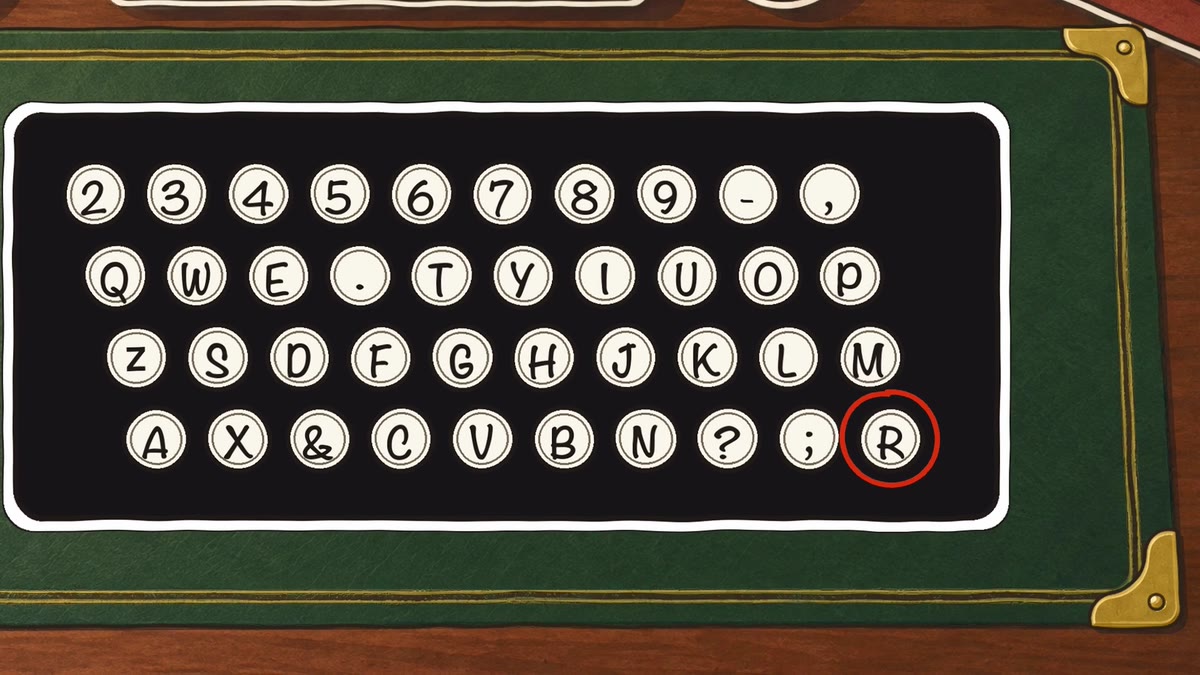
On the machine brought to Remington, the top row of letters read Q W E . T Y I U O P, with a full stop where R is now. R sat at the end of the bottom row. Remington’s mechanics moved R up into the full stop’s seat, and with a few more swaps the layout became essentially the one we use.[7][1] It was still not quite finished: the Yasuokas date further changes to C, X and M to around 1882.[1]
The Sholes and Glidden Type-Writer went on sale in 1874 for about $125, a lot of money at the time.[5][7] It was painted with flowers, like a sewing machine, and you returned the carriage with a foot treadle. It typed only capital letters. The type bars struck the paper from underneath, so the typist couldn’t see the line being typed; to check your work, you lifted the carriage and looked.[7] Mark Twain was one of the first buyers.[7] Even so, only about 400 had sold by the end of 1874, and about 4,000 by 1877.[7]
Why this order? Three stories
The most famous explanation is mechanical. The machine’s type bars, the metal arms that hit the paper, sat in a ring underneath and fell back slowly under their own weight. Strike two neighbouring arms in quick succession and they could clash and stick. So, the story goes, letters that often come together were split apart, and Densmore himself is said to have suggested it.[7]
There is probably something to that. But common pairs were not always kept apart. When the Japanese researchers Koichi and Motoko Yasuoka examined surviving machines, they found E and R, one of the most common letter pairs in English, on neighbouring type bars.[1]
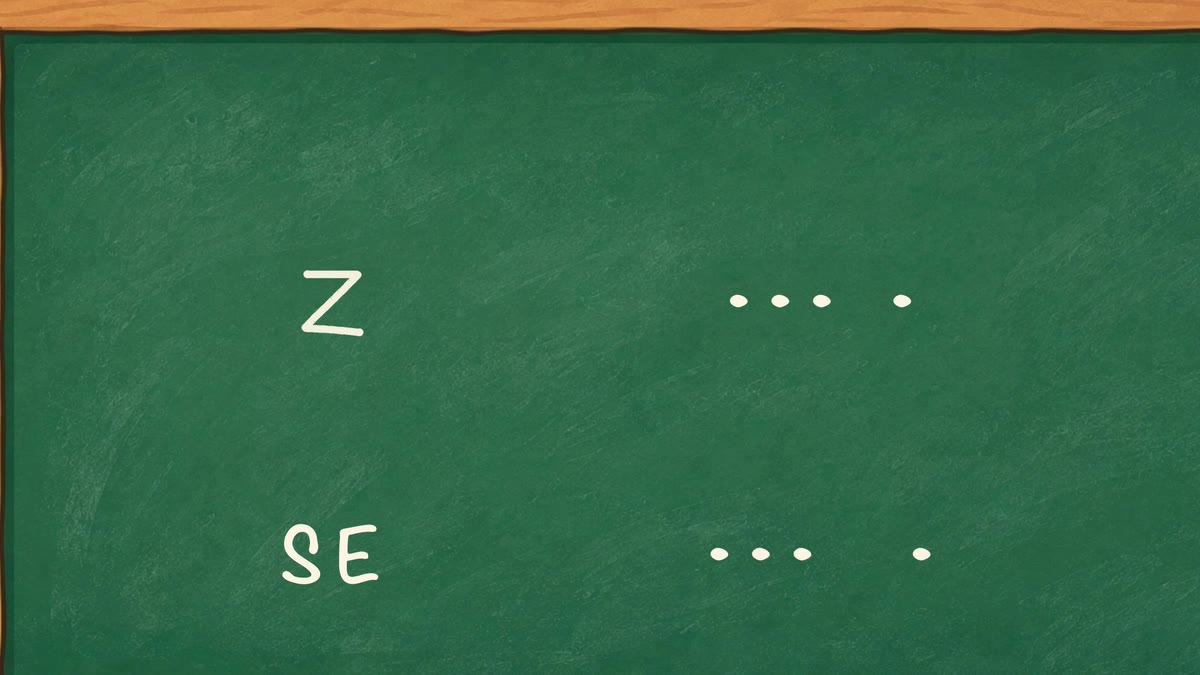
The Yasuokas offer a second idea. They argue that the layout was shaped by some of the machine’s first users: telegraph operators, copying down Morse code as it came in.[1][4] In the American Morse code of the day, Z sounded very like S followed by E. So, they argue, it helped to have Z, S and E close together while the operator worked out which was meant.[1] Not everyone is convinced, and both ideas could be partly true.
The third story is a favourite. Every letter of “typewriter” is on the top row, and supposedly R was moved so that salesmen could show off by typing the name. It’s a fun idea, but there is no real evidence for it.[7]
And the idea that QWERTY was made to slow typists down? There is no evidence that anyone set out to do that.[7] The whole point of a typewriter was to beat the pen. QWERTY looks more like a patchwork of fixes for one fussy machine.
How QWERTY spread
Plenty of early typewriters used other layouts, so how did this one win? First, a better machine. In 1878, the Remington No. 2 added a shift key, so one key could type both a small letter and a capital, and its success carried QWERTY with it.[7] Some rival machines, such as the Caligraph, took another route, with separate keys for capitals and small letters.[7]
Second, typists. Typing schools taught QWERTY, and offices hired people who knew it.[2][4] On 25 July 1888, a public contest in Cincinnati made front-page news. Frank McGurrin, typing on a QWERTY Remington with all his fingers and without looking at the keys, beat Louis Traub, who used a Caligraph, and won a $500 prize.[7] It is often told as the moment touch typing and QWERTY took off, though McGurrin was not the only fast typist around.
Third, business. In 1893, the leading typewriter makers, Remington among them, came under one holding company, the Union Typewriter Company, which helped make QWERTY the industry standard.[4]
Once millions of people know one layout, switching becomes very expensive. Economists call this lock-in, and in a famous 1985 paper the economist Paul David made QWERTY its classic example.[2] Not every economist agrees: Stan Liebowitz and Stephen Margolis argued in 1990 that QWERTY is not clearly worse than its rivals, so the lock-in story is overstated.[3]
The challenger: Dvorak
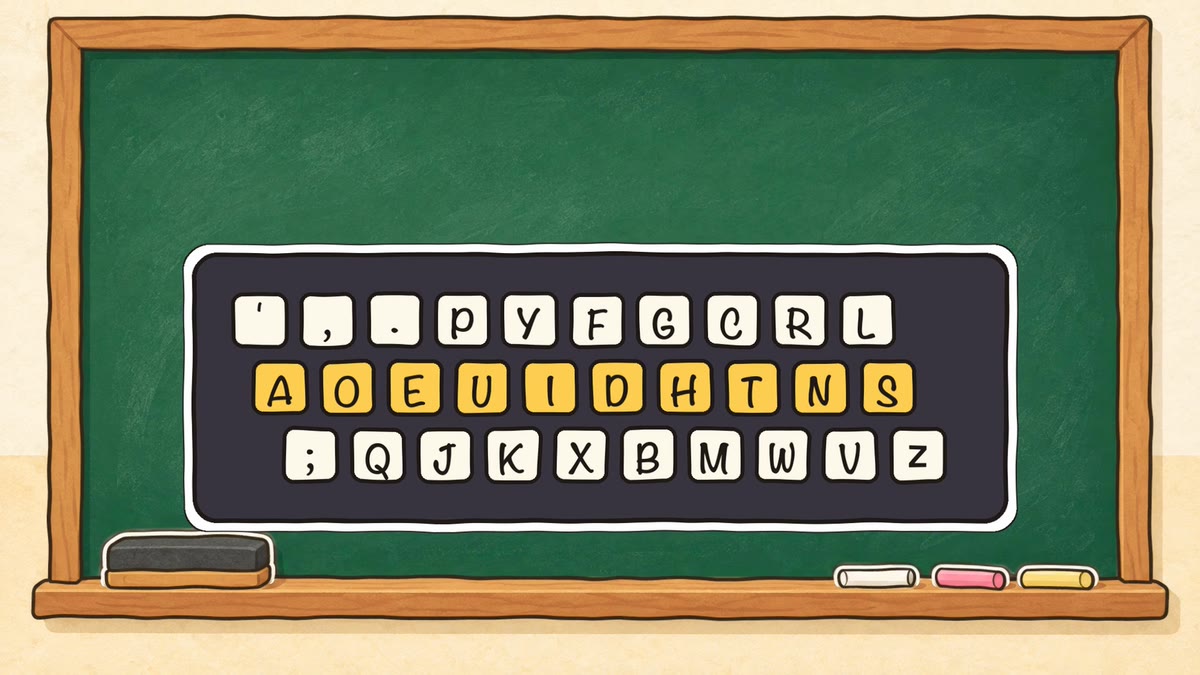
The most famous challenger came from August Dvorak, an education professor, and his brother-in-law William Dealey, who patented their layout in 1936.[6][7] They put the vowels on the left of the middle row and the most common consonants on the right, so the hands take turns. For typical English text, about seven in ten letter keystrokes land on Dvorak’s middle row, against about one in three on QWERTY.[7]
Wartime tests for the US Navy reported big gains for Dvorak, but their methods, and Dvorak’s own part in them, have been disputed.[3][7] In 1956, a US government study by Earle Strong concluded that retraining existing typists wasn’t worth the cost; critics say Strong was biased too.[7] Studies disagree about the size of Dvorak’s advantage, and none has shown a large, dependable gain in speed.[3][7] Once people are well trained, the typist seems to matter more than the layout.[7]
QWERTZ, AZERTY and Turkey’s F
QWERTY did not travel unchanged. In Germany and much of central Europe, keyboards read QWERTZ, partly because Z is far more common than Y in German. France and Belgium use AZERTY.[7] Turkey went further: in 1955 it adopted a layout designed under Ihsan Sitki Yener from studies of Turkish letter frequencies, the F keyboard, and Turkish typists went on to set world records on it. Even so, a Turkish version of QWERTY is still very widely used.[7]
The fossil in your pocket
Computers have no metal arms and nothing to jam. But they inherited QWERTY through older machines such as teleprinters, and familiar keys helped it survive as everything else changed.[1][7] Today QWERTY lives on in smartphone touchscreens too, typed with thumbs on glass.[7]
The layout still leaves odd fingerprints. With the standard touch-typing hand positions, “stewardesses” uses only the left hand and “lollipop” only the right.[7] And the full stop that Remington’s mechanics moved aside? It ended up on the bottom letter row, where it still sits on standard English keyboards.[1][7]
So, was QWERTY designed to slow you down?
No. Its exact origins are still debated: it grew out of years of trial and error on one quirky machine, and perhaps out of the needs of its first users. Its staying power is easier to understand. Machines, schools and offices were all built around one familiar layout, and each made switching harder. Next time you type, you are using a little piece of the 1870s.
Sources
- Yasuoka, K. and Yasuoka, M. (2011). On the Prehistory of QWERTY. ZINBUN 42, Kyoto University.
- David, P. A. (1985). Clio and the Economics of QWERTY. American Economic Review 75(2).
- Liebowitz, S. J. and Margolis, S. E. (1990). The Fable of the Keys. Journal of Law and Economics 33.
- Smithsonian Magazine (2013). Fact of Fiction? The Legend of the QWERTY Keyboard.
- Smithsonian National Museum of American History. Sholes and Glidden Type-Writer (collection record).
- Dvorak, A. and Dealey, W. L. (1936). US Patent 2,040,248, Typewriter Keyboard.
- Wikipedia. QWERTY; Sholes and Glidden typewriter; Christopher Latham Sholes; Dvorak keyboard layout; QWERTZ; Turkish F-keyboard; Frank Edward McGurrin.
- Portraits (public domain): The Story of the Typewriter 1873-1923, Herkimer County Historical Society (1923) (C. L. Sholes); The Descendants of Charles Glidden (1925) (Carlos Glidden); National Cyclopaedia of American Biography (1893) (James Densmore); A. F. Bradley (1907), Library of Congress (Mark Twain); The History of Touch Typewriting (1900) (Frank E. McGurrin).