
Why Can’t You Remember Being a Baby? The Science of Infantile Amnesia
Think back to your very first memory. How old were you? In Western studies, the average earliest memory dates to around three to three and a half.[12][13] Yet those first years were some of the busiest of your life. You learned to recognise faces, to walk and to start talking, all from scratch. Scientists call the missing years infantile or childhood amnesia, and almost everyone has it.[3] So were those memories never made? Were they wiped? Or are they still in there somewhere? Researchers don’t have the full answer yet, but the clues they have found are fascinating.
Prefer to watch? The animated version follows the clues from a baby’s cot to a brain scanner, a mouse lab and a Paris pavement.
Babies are not blank slates
First, a myth to clear up: babies do not forget everything instantly. They are surprisingly good at remembering.
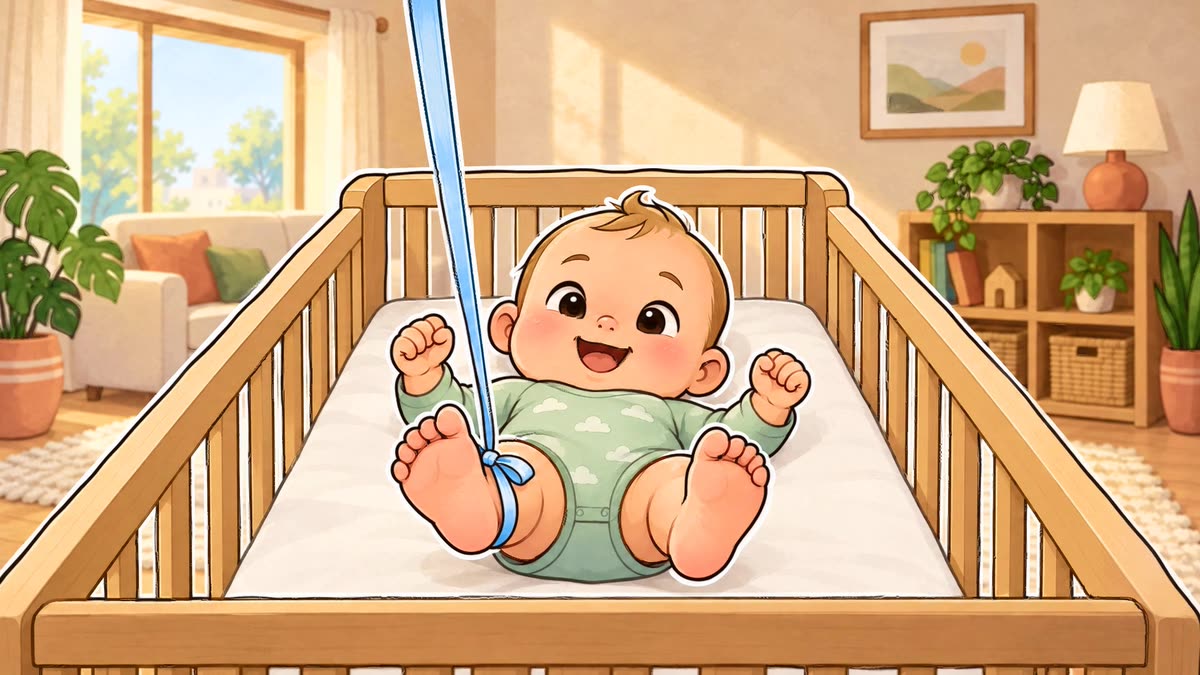
In classic experiments, researchers tied a soft ribbon from a baby’s ankle to a mobile hanging over the cot. The babies quickly worked out that kicking made the mobile move. Babies around three months old still remembered the trick about a week later; at six months, about two weeks.[7]
Babies may even learn before they are born. In one small 1986 study, mothers read a short passage aloud again and again in the last weeks of pregnancy; one of the passages came from The Cat in the Hat. After birth, the newborns changed their sucking pattern to hear the familiar passage rather than a new one, even when another woman read it.[8] Something about its sound had stayed familiar. That is recognition of a sound, not a memory of the womb.
So babies remember. But a skill or a familiar sound is one thing. A specific moment, like your second birthday party, is another. Can babies store those too?
Inside the baby scanner
You can’t ask a baby what it remembers. Instead, researchers watch where babies look: depending on the task, babies tend to look longer at something new or at something they have seen before, and that difference reveals memory.[1][7]
In 2025, researchers at Yale went one step further and scanned the brains of awake babies while they looked at pictures. Twenty-six babies, from about four months to two years old, gave usable data.[1] Each baby saw new faces, objects and scenes. About a minute later, on average, one of those pictures appeared again beside a brand-new one. If a baby looked longer at the one it had seen before, it had probably recognised it.[1]
The team watched one part of the brain in particular: the hippocampus, a small curled structure deep inside the brain, one on each side, named after the seahorse for its shape. It is central to forming memories of events.[9]
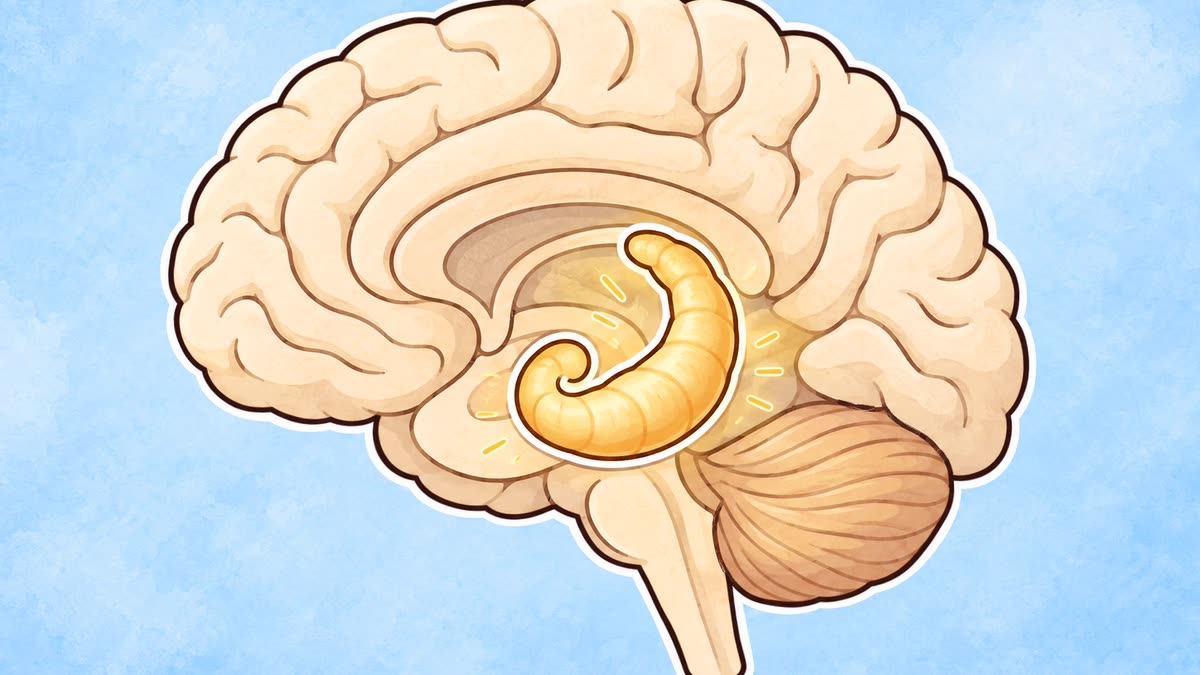
The result was striking. When a baby’s hippocampus was more active the first time it saw a picture, the baby was more likely to recognise it later. That link appeared in babies around a year old and older.[1] It suggests the hippocampus can already encode individual experiences in infancy. It does not tell us how long those memories last, and it does not show that younger babies can’t remember. So the real question becomes: what happens to those memories?
A brain under construction
Part of the answer may be construction work. The hippocampus and its connections to the rest of the brain keep developing for years after birth, and some of its circuits mature especially slowly.[9]
Young brains also keep adding parts. In young mice, the hippocampus adds new neurons rapidly, and young mice forget what they have learned far faster than adults do.[4] In 2014, a team in Toronto found that in infant mice, all that new-neuron growth went along with fast forgetting. When the researchers slowed the growth down, the young mice held on to their memories longer. When they boosted new neurons in adult mice, for example with running wheels, the adults started forgetting more.[4]
One idea is that new neurons rewire existing circuits, so older memories become harder to find.[4] If something similar happens in people, and that is still a hypothesis, a baby’s fast-growing brain may be like a library being rebuilt while the books are still on the shelves. These are mouse experiments, and they are not advice for humans.
Lost, or just locked away?
So are early memories destroyed, or just hard to reach? In 2018, the Toronto team tried something remarkable, again in mice. They tagged the brain cells that were active while young mice learned to be wary of one particular box. Weeks later, the mice had forgotten it. Then the researchers switched those same cells back on, using light, and part of the learned response came back, even three months later.[5] That suggests a trace of the memory had survived the ordinary forgetting, though the recovery was only partial.
The Yale paper interprets its findings as consistent with animal evidence that some infant memories can persist while becoming difficult to retrieve.[1][5] Whether human infant memories remain accessible in some form later in life is still unknown.
Words and a sense of “me”
The brain’s hardware is only part of the story. Language may be another part.[6]
Researchers in New Zealand built a toy they called the Magic Shrinking Machine. Toddlers aged about two to three put a big toy in the top, turned a handle, and a smaller copy came out of the bottom. Six months or a year later, the children were asked about it. By then they had learned most of the words they would need to describe the machine, but in that test, they described the event only with words they could already say when it happened. Acting it out worked better than telling.[6]
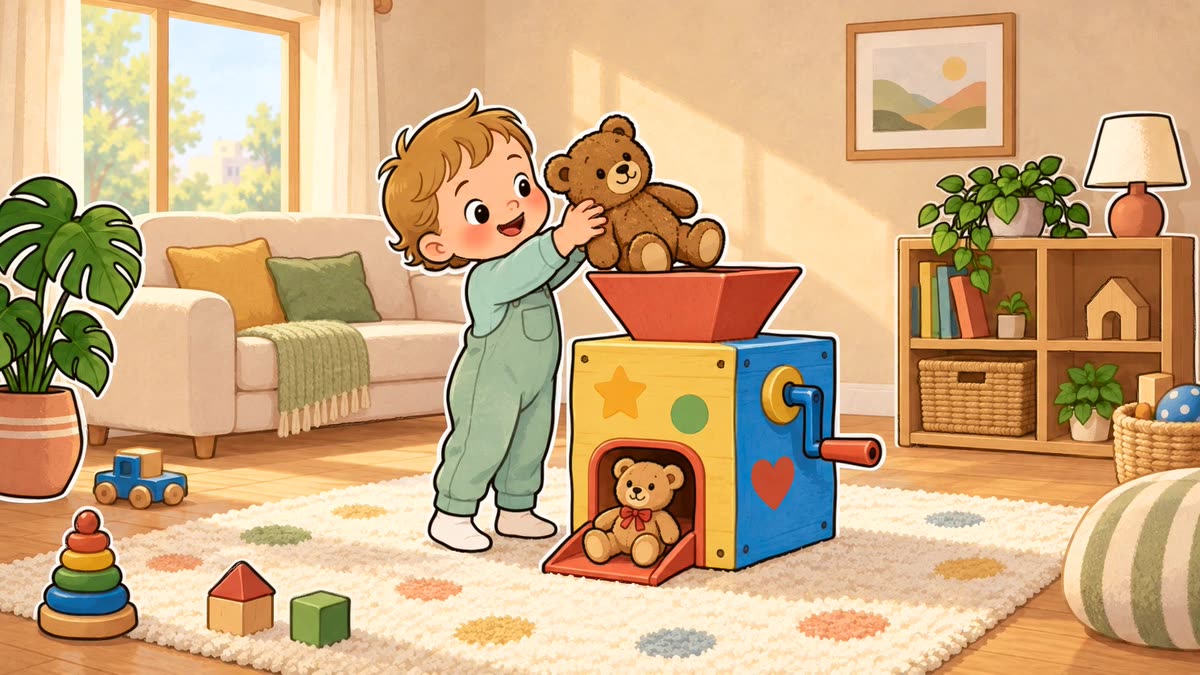
Researchers think language helps us organise memories, retell them and keep them.[6] Without words, a moment may be harder to turn into a story, even for yourself.
Then there is the self. Around eighteen months to two years, many toddlers start to recognise themselves in a mirror. Put a dot of colour on a child’s nose, and they reach for their own face, not the reflection.[10] It is one sign of a developing sense of self. In one famous study, some magpies seemed to pass a version of the test too, though a later study could not repeat the result.[11] Some researchers think a developing sense of “me” helps organise memories into a life story, one with you at the centre.[10]
When does your story begin?
Childhood amnesia is not a wall at age three. Young children remember much more at first. In one study, children talked with their parents about events when they were three. Children tested between five and seven could still recall most of those events; separate groups tested at eight or nine recalled fewer than four in ten.[3] Early memories slowly fade during the school years, until we are left with the adult pattern.
Where that line falls also varies between people and cultures. In one New Zealand study, Māori adults dated their earliest memories to about two years and nine months on average, roughly ten months earlier than New Zealanders of European descent.[12] In another comparison, Chinese students dated their earliest memories about six months later than American students, on average.[13] Researchers link these differences partly to how families talk about the past: rich, detailed storytelling with children goes along with earlier memories.[12][13] These are averages, and no culture “remembers better”.
The memory that never happened
Here’s a twist: some of the memories we think come from our earliest years might not be memories at all. In a 2018 survey of more than 6,600 people, nearly four in ten said their first memory came from age two or younger, and almost nine hundred placed it at age one or younger.[2] The authors suggested these very early memories might be reconstructions, built from fragments, family photos and stories heard many times. The survey could not tell which were invented, misdated or genuine.[2]
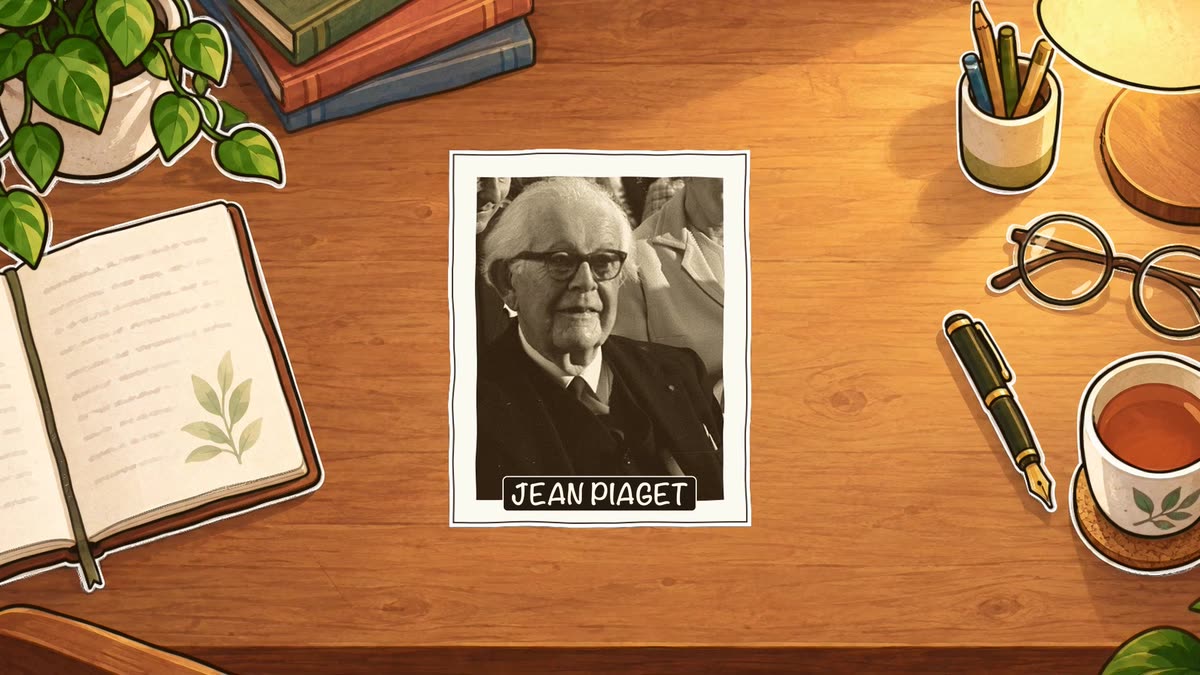
The famous psychologist Jean Piaget had one. For years, he clearly remembered someone trying to snatch him from his pram in Paris, and his nurse fighting them off. Then, when he was about fifteen, the nurse wrote to his family and confessed that she had made the whole thing up. Piaget concluded that he had built a vivid memory out of a story told around him.[14]
The years that built you
So why can’t you remember being a baby? Probably not for one single reason. Several things likely work together: a memory system still under construction, circuits that keep changing, and a growing ability to turn experiences into a personal story.[1][4][9][10] Not remembering those years is completely normal.
Your memories from that time may have faded, or may be locked away; researchers are still finding out. But those years weren’t lost. You learned to walk, to talk and to recognise the people around you. You just don’t remember learning it.
What’s your earliest memory, and how sure are you that it’s really yours?
Sources
- Yates, T. S., et al. (2025). Hippocampal encoding of memories in human infants. Science 387.
- Akhtar, S., Justice, L. V., Morrison, C. M., Conway, M. A. (2018). Fictional first memories. Psychological Science 29(10).
- Bauer, P. J., Larkina, M. (2014). The onset of childhood amnesia in childhood. Memory 22(8).
- Akers, K. G., et al. (2014). Hippocampal neurogenesis regulates forgetting during adulthood and infancy. Science 344.
- Guskjolen, A., et al. (2018). Recovery of ‘lost’ infant memories in mice. Current Biology 28(14).
- Simcock, G., Hayne, H. (2002). Breaking the barrier? Children fail to translate their preverbal memories into language. Psychological Science 13(3).
- Rovee-Collier, C. (1999). The development of infant memory. Current Directions in Psychological Science 8(3).
- DeCasper, A. J., Spence, M. J. (1986). Prenatal maternal speech influences newborns’ perception of speech sounds. Infant Behavior and Development 9.
- Lavenex, P., Banta Lavenex, P. (2013). Building hippocampal circuits to learn and remember. Behavioural Brain Research 254.
- Howe, M. L., Courage, M. L. (1993). On resolving the enigma of infantile amnesia. Psychological Bulletin 113(2).
- Prior, H., Schwarz, A., Gunturkun, O. (2008). Mirror-induced behavior in the magpie. PLoS Biology 6(8); Soler, M., et al. (2020), Journal of Comparative Psychology.
- MacDonald, S., Uesiliana, K., Hayne, H. (2000). Cross-cultural and gender differences in childhood amnesia. Memory 8(6).
- Wang, Q. (2001). Culture effects on adults’ earliest childhood recollection and self-description. Journal of Personality and Social Psychology 81(2).
- Piaget, J. (1962). Play, Dreams and Imitation in Childhood.
- Photo of Jean Piaget (1972): Nationaal Archief, Fotocollectie Anefo (public domain dedication, CC0).